
St Margaret's parish church, Hopton-on-Sea, Norfolk, seen from the southwest. Built to replace an earlier church that burnt down in 1865.
Old Milepost. Old broken milepost on what was the A.12 at Hopton On Sea, Norfolk. For close up view see 1803549
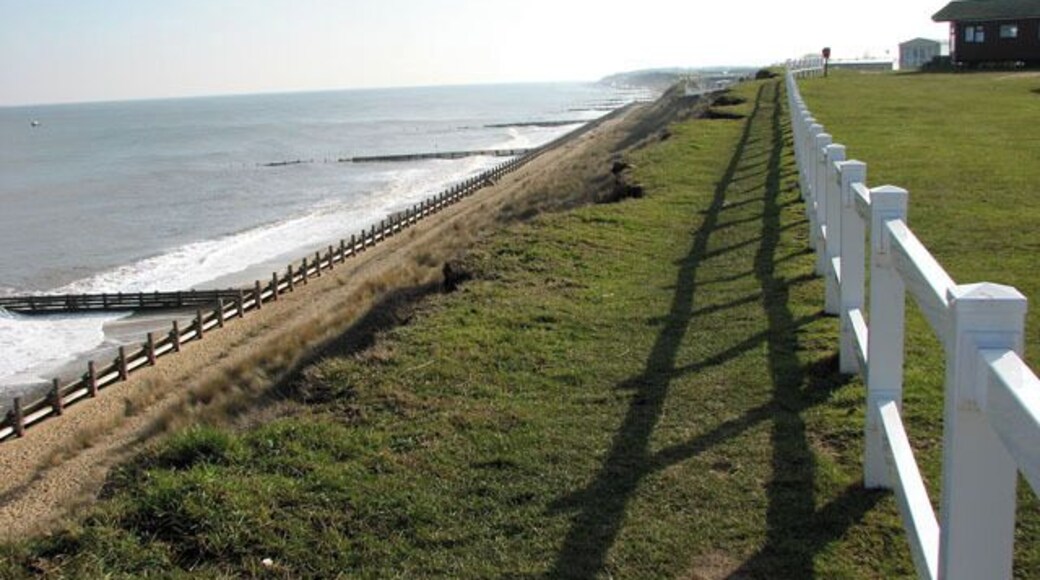
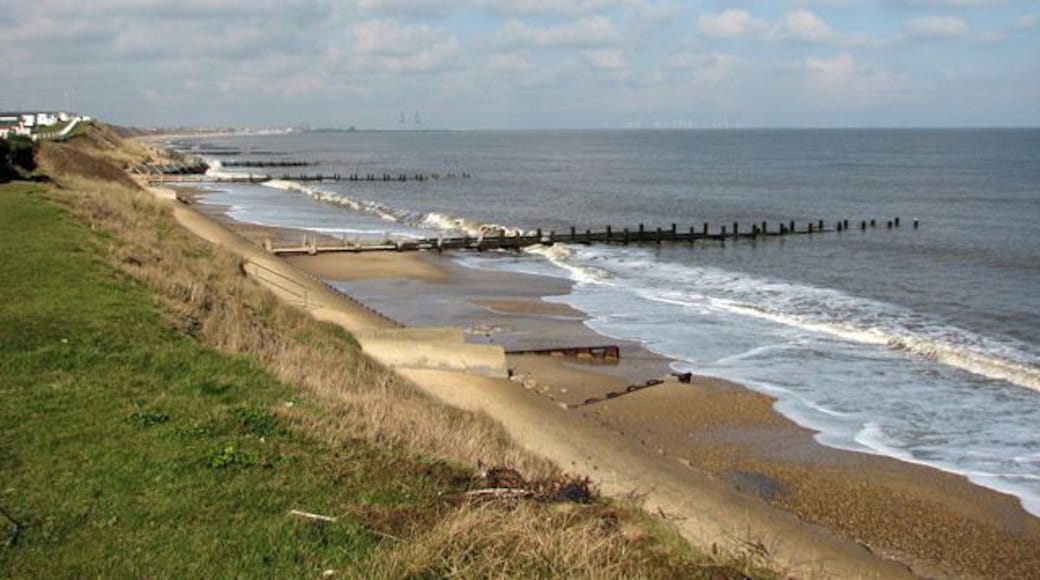
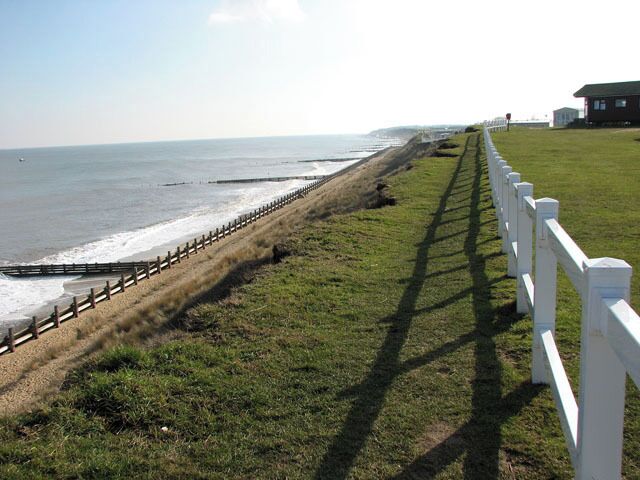
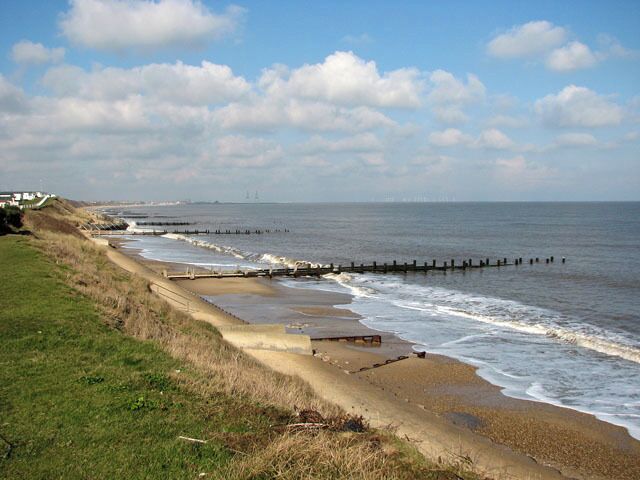
Eroding clifftop path A narrow path leads along the crumbling clifftop, skirting the adjoining caravan parks. The Norfolk coastline is almost 100 miles long and extends from Hopton, just south of Great Yarmouth, northwards past the seaside resorts of Winterton, Happisburgh, Mundesley, Cromer, Sheringham and Holkham before it merges into Lincolnshire at King's Lynn. After the devastating floods in 1953, where 300 people lost their lives, the first sea defences were built along the coastline and at first the rate of erosion decreased. However, large portions of the revetments have been destroyed during the last 40 years, despite repairs, and beach and cliff erosion continue. The Shoreline Management Plan in its present format proposes no active intervention for a number of villages along the East Anglian coast, leaving them unprotected. One of these villages is Hopton, situated several miles south of Great Yarmouth, where the southern end of the Hopton to Corton seawall had to be closed due to storm damage, with the anticipation of a collapse of the structure > https://www.geograph.org.uk/photo/1717919. A warning for walkers to take extra care has also been placed at the clifftop path > https://www.geograph.org.uk/photo/1717876 where cliff falls on the path to Corton have occurred recently and more are expected > https://www.geograph.org.uk/photo/1717883. Some blame the existence of the new outer harbour in Great Yarmouth for the loss of sand and beach area, and although some of the sand has since returned it is still at a low level. The privately owned East Port at Great Yarmouth, a multi-purpose facility integrating a new deep-water outer harbour, was opened in May 2007.
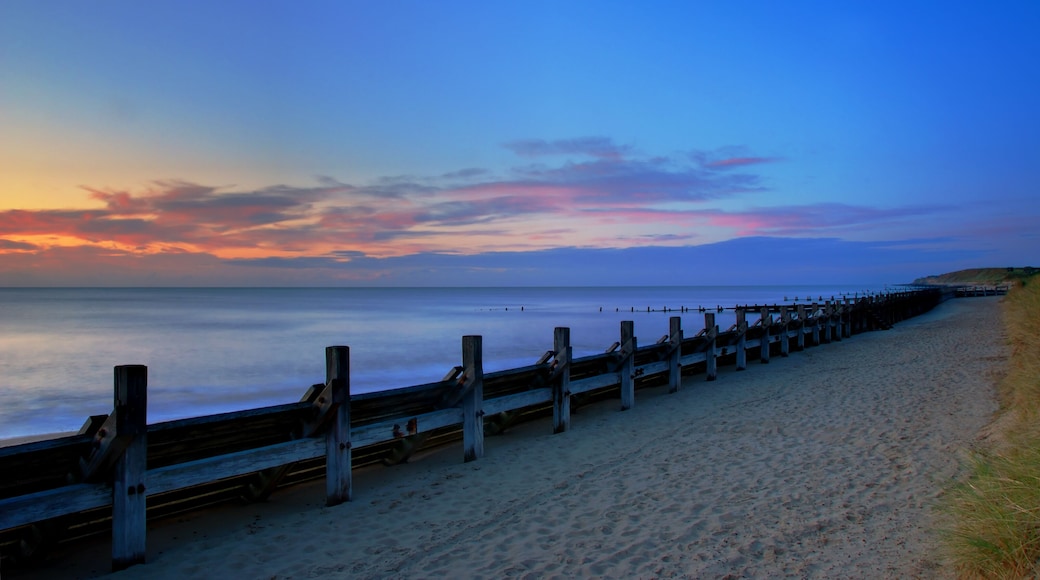
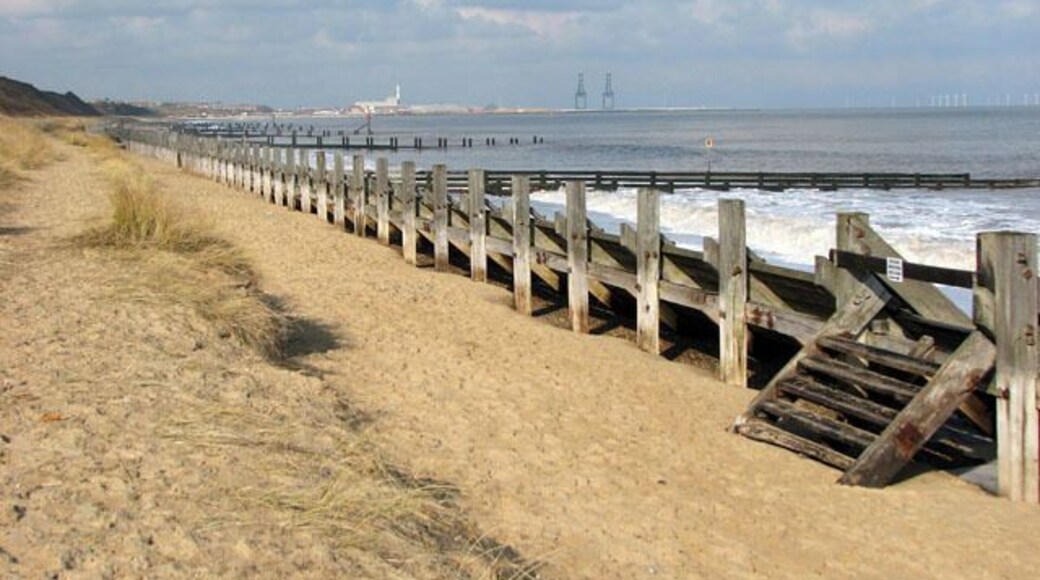
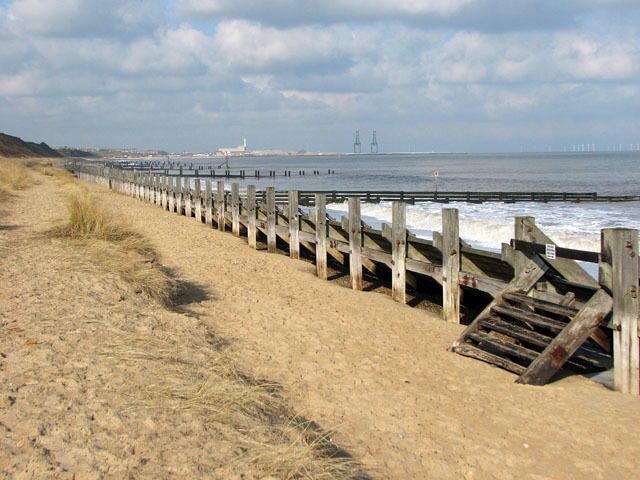
Groynes and revetment on the beach below Hopton-on-Sea. The Norfolk coastline is almost 100 miles long and extends from Hopton, just south of Great Yarmouth, northwards past the seaside resorts of Winterton, Happisburgh, Mundesley, Cromer, Sheringham and Holkham before it merges into Lincolnshire at King's Lynn. After the devastating floods in 1953, where 300 people lost their lives, the first sea defences were built along the coastline and at first the rate of erosion decreased. However, large portions of the revetments have been destroyed during the last 40 years, despite repairs, and beach and cliff erosion continue. The Shoreline Management Plan in its present format proposes no active intervention for a number of villages along the East Anglian coast, leaving them unprotected. One of these villages is Hopton, situated several miles south of Great Yarmouth, where the southern end of the Hopton to Corton seawall had to be closed due to storm damage, with the anticipation of a collapse of the structure > 1717919. A warning for walkers to take extra care has also been placed at the clifftop path > 1717876 where cliff falls on the path to Corton have occurred recently and more are expected > 1717883. Some blame the existence of the new outer harbour in Great Yarmouth for the loss of sand and beach area, and although some of the sand has since returned it is still at a low level. The privately owned East Port at Great Yarmouth, a multi-purpose facility integrating a new deep-water outer harbour, was opened in May 2007.

أماكن مشهورة يمكنك زيارتها