
What differentiates the PEI oyster is a clean, salty taste that finishes sweet – a combo unique to the Gulf of Saint Lawrence – and it becomes arguably even more succulent when the temperature drops. That's because as the ocean cools, the oyster's adductor muscle, which holds the shell together, grows stronger, adding a little bit of sweetness to the taste.

The oyster is also at its plumpest right when the cold weather hits, having filtered up to 189 litres of water a day while feeding on plankton until the waters drops to four degrees Celsius. Over the winter, the oyster lies dormant until spring.

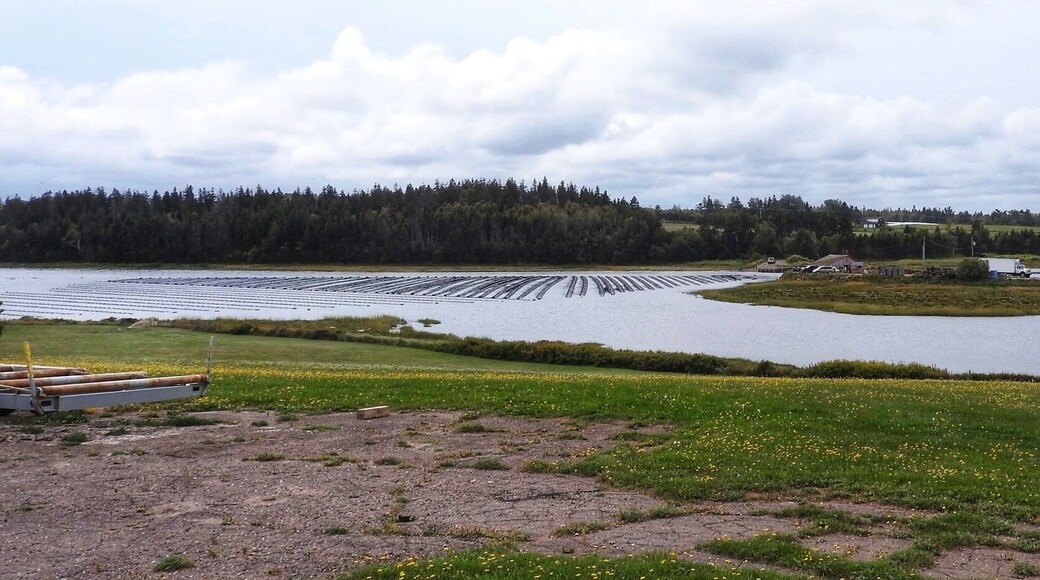
Oyster farming at Hope River in Breadalbane, PEI (September 2017)
What differentiates the PEI oyster is a clean, salty taste that finishes sweet – a combo unique to the Gulf of Saint Lawrence – and it becomes arguably even more succulent when the temperature drops. That's because as the ocean cools, the oyster's adductor muscle, which holds the shell together, grows stronger, adding a little bit of sweetness to the taste.

The oyster is also at its plumpest right when the cold weather hits, having filtered up to 189 litres of water a day while feeding on plankton until the waters drops to four degrees Celsius. Over the winter, the oyster lies dormant until spring.

Oyster farming at Hope River in Breadalbane, PEI (September 2017)