
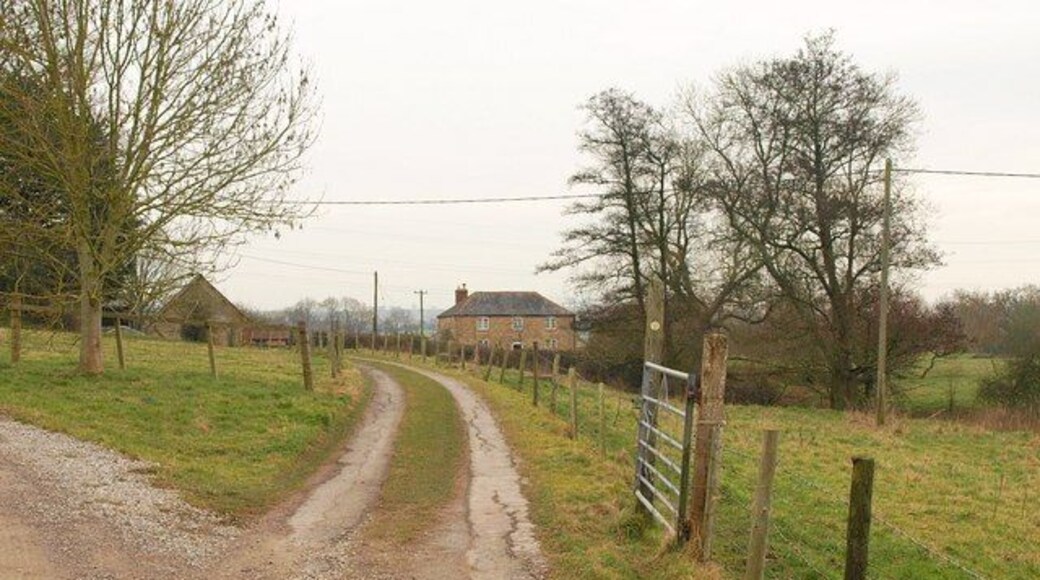
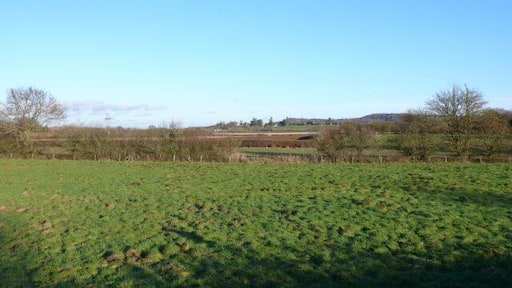
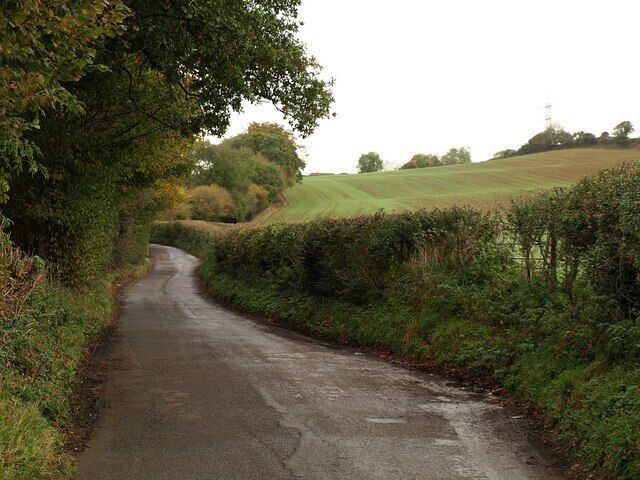
Footpath at Bradford Abbas Public footpath N6/4 leaves the road northeast of Smith's Bridge, heading past The Old Mill along this track. The trees on the right are on the line of the old mill tail, returning water from the mill leat to the nearby River Yeo.
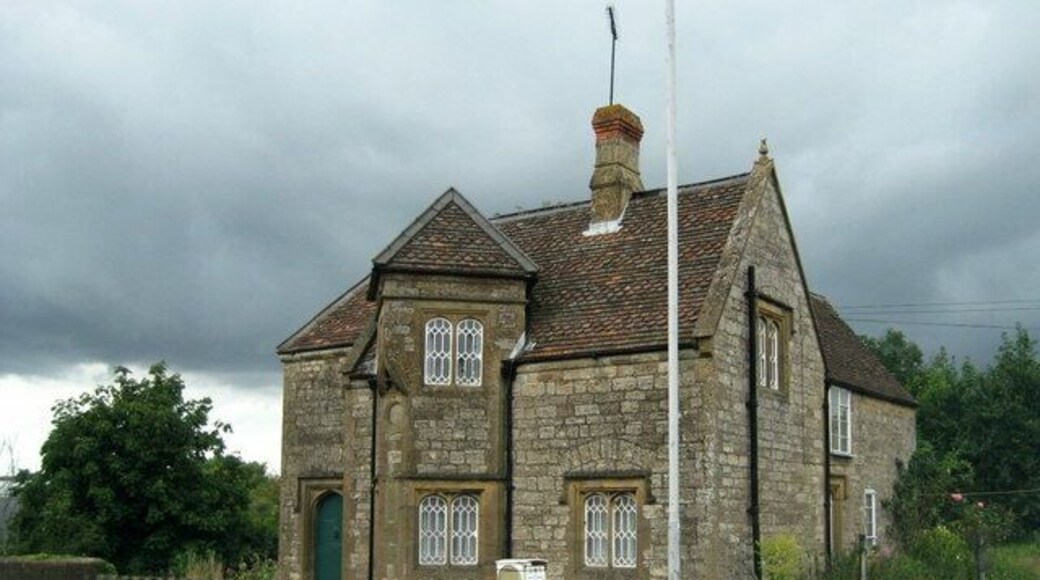
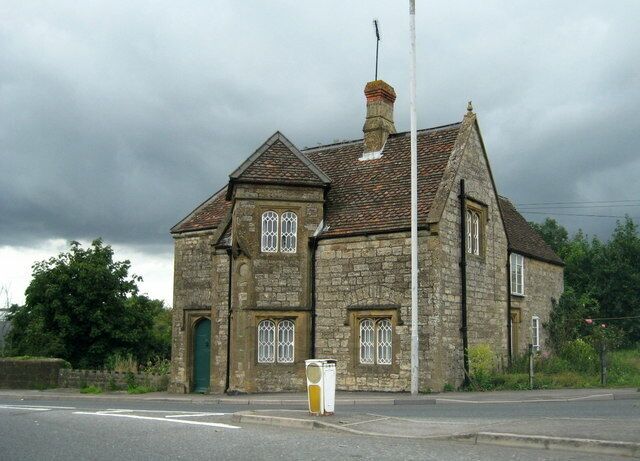
Yeovil Bridge Tollhouse Unfortunately it is very difficult to take a photograph of the front of this building without standing in the next gridsquare as the line runs just by it. The building is built in stone and looks Victorian but is probably much older.
Entrance to the 5th Tee Golfers have to cross the road at this point.
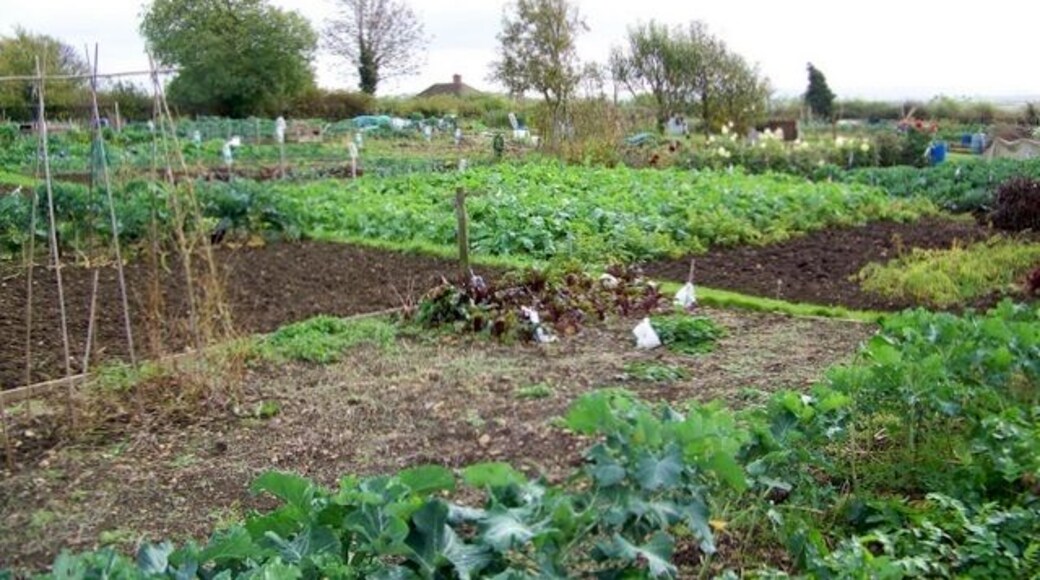
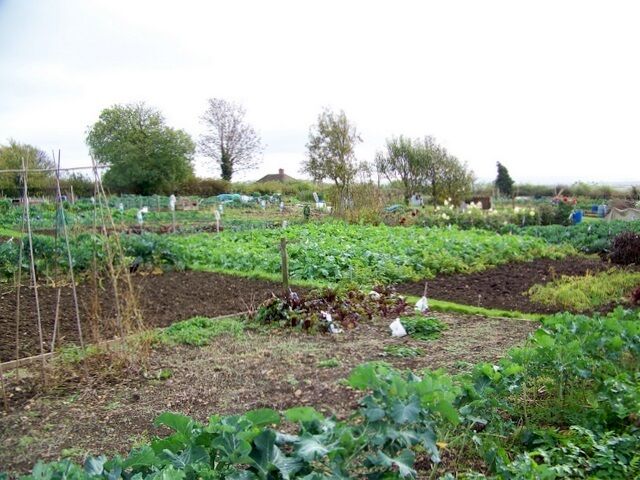
Allotments, Bradford Abbas Allotments are small parcels of land rented to individuals usually for the purpose of growing food crops. There is no set standard size but the most common plot is 10 rods, an ancient measurement equivalent to 302 square yards or 253 square metres. The land itself is often owned by local government (parish or town councils) or self managed and owned by the allotment holders through an association. Some allotments are owned by the Church of England. The history of allotments can be said to go back over a thousand years to when the Saxons would clear a field from woodland which would be held in common. Following the Norman conquest, land ownership became more concentrated in the hands of the manorial lords, monasteries and church. The reformation in the 1540s confiscated much of the church lands but they were transferred via the crown to the lords. In the late 1500s under Elizabeth I common lands used by the poor for growing food and keeping animals began to be enclosed dispossessing the poor. In compensation allotments of land were attached to tenant cottages. This is the first mention of allotments. The modern notion of an allotment came into being during the Nineteenth Century. A lot of people from the country went to work and live in towns; there was a lot of poverty, and what the Victorians called "degeneracy" amongst the working classes.

أماكن مشهورة يمكنك زيارتها